


Mind Maps and Concept Maps
I’ve been outlining some instructional strategies that effective teachers use to encourage student learning. Mind Maps and Concept Maps are good because we are mostly visual learners.
Mind Maps are a fun, creative way to organize ideas around one main topic. They start with a central idea in the middle and branch out like a tree or spider web with words, colors, and pictures. They help with brainstorming, remembering things, and showing how ideas connect loosely. They’re not super strict — you can make them colorful and doodle-y!
Concept Maps are a bit more organized. They show concepts (ideas) and how they are connected with lines and short linking words (like “needs” or “makes”). They help explain relationships clearly, often in a top-to-bottom or web style. They’re great for school topics like science or history.
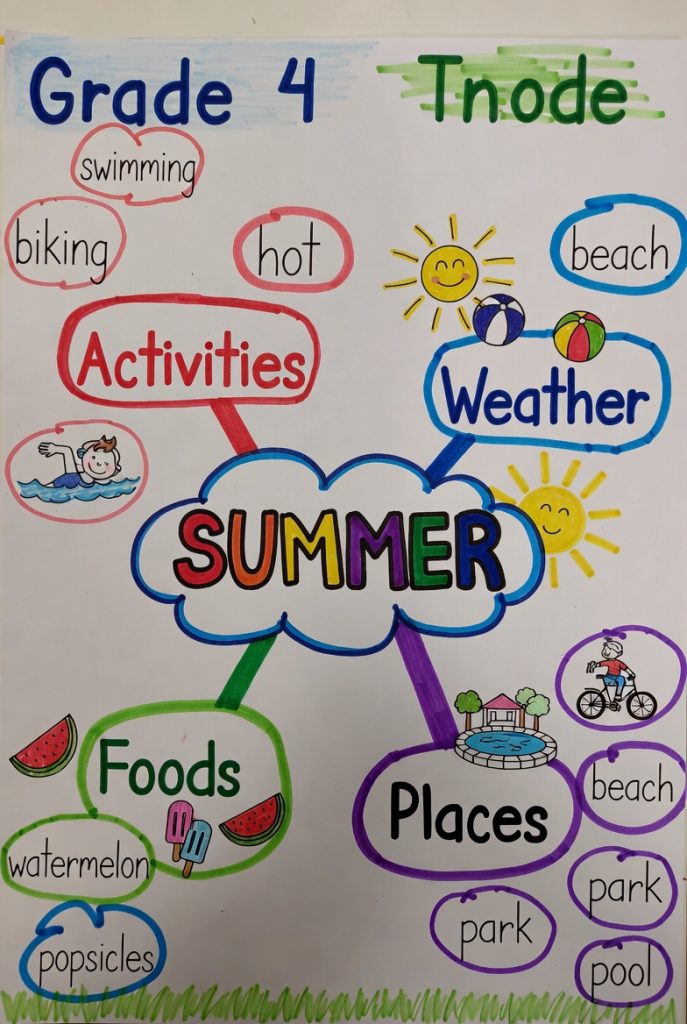
Grade 4 Mind Map Example: “My Favorite Season – Summer”
Imagine a big circle in the middle saying SUMMER with a smiling sun.
Branches coming out:
- Activities → swimming, biking, ice cream
- Weather → hot, sunny, beach
- Places → park, pool, vacation
- Foods → watermelon, popsicles
It would look bubbly and colorful with little drawings. Here’s a generated simple version:
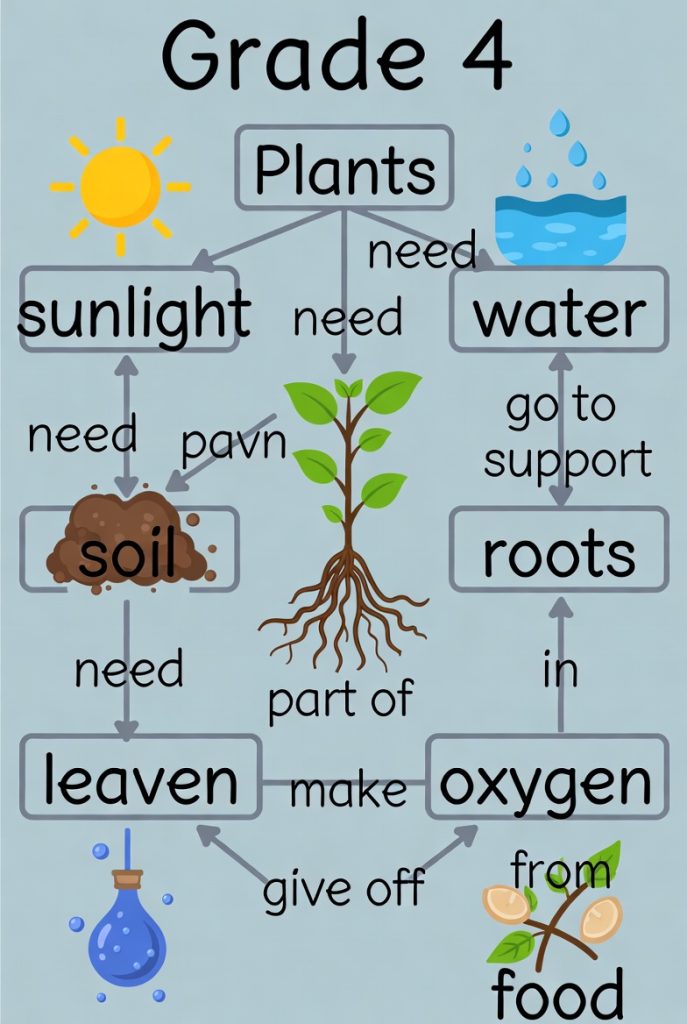
Grade 4 Concept Map Example: “Plants”
Start with Plants at the top.
Arrows/lines connect to:
- Plants need → sunlight, water, soil, air
- Plants make → oxygen and food (for animals)
- Plants have → roots, stem, leaves, flowers
- Plants grow into → bigger plants or trees
Linking words on the lines make the relationships clear.Here’s a generated simple version:
Both tools help you study and think better! Mind maps are more free and creative, while concept maps focus on clear connections. Try making your own on paper with crayons or colored pencils.