

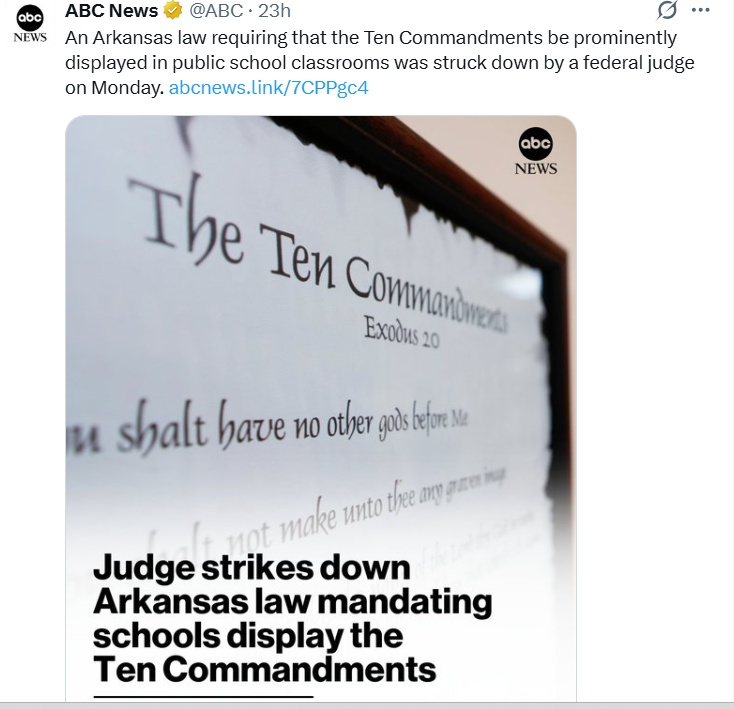
Brainstorm ideas why or why not the 10 Commandments should be in schools
Brainstorm ideas why or why not the 10 Commandments should be in schools
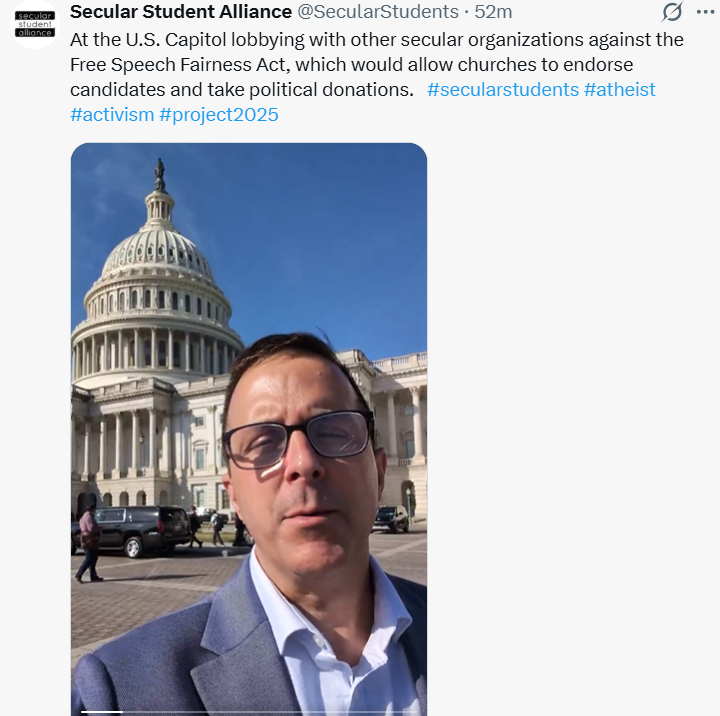
An Activist tries to improve things in society or prevent them from getting worse. Look at this secularism activist lobbying against churches that want to change the rules:
What can you do to make a better world?
Do you know what kinds of things make teaching hard? It’s not just getting students to understand. How do we explain to kids not to fight when they see it all the time in sports like hockey and UFC? What about trying to teach politics when kids want to know about political scandals? What does a teacher do when the class doesn’t want to listen or everyone finishes their work at different times? How do we deal with a child misbehaving if we know they have a really difficult home life?
Brainstorm ideas that could make teaching tough and how to deal with those challenges.
KPop Demon hunters is one of the most popular movies among elementary school kids. Watch their video Golden and say what you think the lesson or message is:
Students at Alpha School have NO academic teachers. Instead, they have guides who act like athletic coaches, challenging students and providing motivational and emotional support to help them find their ‘why.’ The primary role of a guide is to know each student personally, facilitate life skills, and engage them in collaborative, hands-on projects. So, how do students learn their academics without teachers? They follow a program called 2 Hour Accelerated Learning, completing core subjects in just two hours daily through AI tutors and apps. These tools diagnose where a child might be struggling or excelling, allowing for mastery and accelerated growth. As a result, students grasp material 2.5 times faster. With four additional hours freed up each day, students can dive deep into workshops, exploring real-world skills and their passions. Check out this short video on Alpha School and then make a list about what a school and classrooms you designed would be like!
BONUS: Design your own classroom!
This is a great time of year for thinking about your goals for the new year. Pick one from the list below and come up with some of you own!
New Year’s resolution ideas for kids (5 to 12 years old)
I will drink water every day and healthy beverages like milk with meals. I will keep soda and fruit drinks only for special times.
I will wear my seat belt every time I get in a car. I’ll sit in the back seat and use a booster seat until I am tall enough to use a lap/shoulder seat belt.
I will try to find a physical activity (like playing tag, jumping rope, dancing or riding my bike) or a sport I like and do it at least three times a week!
I will take care of my skin by putting on sunscreen and wearing a hat and sunglasses when possible.
I will always wear a helmet when riding a bike, scooter or skateboard.
I’ll try to be friendly to kids who may have a hard time making friends by talking with them and inviting them to join activities.
I will tell an adult about bullying that I see or hear about to do what I can to help keep school safe for everyone.
I will keep my personal info safe and not share my name, home address, school name or telephone number online. Also, I’ll never send a picture of myself to someone I chat with on the computer or phone without asking my parent if it is okay.
I will try to talk with my parent or a trusted adult when I have a problem or feel stressed.
I promise that I’ll do my best to follow our household rules for videogames and internet use.
I will try to save time to read for fun.
Learning to play with and master language is essential for kids in becoming thinkers, whether with logic (“that’s impossible”) or humor (“that’s impossible, lol!”)
Jokes can be classified in various ways, but many rely on linguistic mechanisms like figurative language (e.g., metaphors or exaggerations), ambiguity (e.g., words with multiple meanings), or usage contrary to norms (e.g., irony or mispronunciations). Below, I’ll focus on key types that prominently feature these elements, drawing from common categorizations in humor studies. I’ve selected and consolidated from broader lists to emphasize verbal humor, providing a description, example, and explanation of the language play for each. Non-linguistic types like slapstick (purely physical) or observational (commentary on life without word twists) are omitted here unless they tie into word usage.
Pun (Wordplay) A joke exploiting similar-sounding words or multiple meanings of a single word for humor. “Time flies like an arrow; fruit flies like a banana.” Relies on ambiguity— “flies like” can mean “passes quickly resembling” (figurative) or “insects enjoy” (literal), playing on dual interpretations contrary to initial expectation.
Double Entendre A phrase intentionally open to two interpretations, often one innocuous and one suggestive. “She was only a whiskey maker, but he loved her still.” Builds on ambiguity—the word “still” means both “even so” and a distillation device, subverting usual single-meaning usage for a twist.
Irony Expressing meaning through words that convey the opposite of what’s intended, often to mock or highlight absurdity. “What a beautiful day!” said during a thunderstorm. Uses words contrary to literal truth (saying positive for negative), creating figurative contrast between expectation and reality.
Sarcasm A form of irony where mockery is delivered by saying the opposite, often with biting tone. “Oh, great job!” after someone spills coffee everywhere. Employs contrary usage—words mean the inverse of their face value, relying on context to flip literal meaning figuratively for emphasis.
Hyperbole Exaggerating for comedic effect, amplifying reality beyond plausibility. “I’m so hungry I could eat a horse.” Figurative overstatement contrary to literal possibility, using extreme language to highlight a mild truth in an absurd way.
Understatement Minimizing or downplaying something for ironic humor. “It’s just a scratch,” said about a deep wound. Contrary to usual expressive usage—figuratively belittles severity, creating ambiguity between stated mildness and implied seriousness.
Malapropism Misusing a word by substituting a similar-sounding one, leading to absurdity. “He’s a wolf in cheap clothing.” (Instead of “sheep’s clothing.”) Contrary to standard usage—ambiguous sound-alikes twist meaning, subverting expectations for comedic error.
Spoonerism Swapping initial sounds or letters of words, often accidentally, for nonsense humor. “You have hissed my mystery lecture.” (Meant: “missed my history lecture.”) Alters words contrary to norms, creating ambiguous or figurative new phrases that sound ridiculous but echo the original.
Anti-Humor Sets up a joke expectation but delivers a literal or mundane punchline, subverting humor norms. “Why did the chicken cross the road? To get to the other side.” Contrary to typical joke structure—avoids figurative twists or ambiguity, using straightforward language to defy anticipated cleverness.
Parody Mimics a style, work, or person exaggeratedly to mock it. A song parodying a hit tune with silly lyrics, like “Weird Al” Yankovic’s “Eat It” (parody of “Beat It”). Uses figurative imitation contrary to original intent, amplifying ambiguities in the source for satirical effect.
These types often overlap (e.g., a pun can be ironic), and the core mechanism in verbal jokes is misdirection—leading the audience one way linguistically, then revealing an alternative interpretation. This exploits how language can be flexible, with words carrying layered meanings or sounds that allow for playful subversion.
Activity: Come up with two examples of each type of joke.
The Flintstones was one of the most popular cartoons of the last century. Do you notice anything odd about this clip?
In this Christmas classic, Linus explains to Charlie Brown what the true meaning of Christmas is:
Do you agree? What if you are Jewish and don’t have faith in Christ? What if you are a secular kid and don’t believe in the supernatural? Can you celebrate Christmas without Christ?
A Parody Song uses the music from a song but changes the words to make it funny. One easy way to do this is to use a rhyming dictionary (there are lots online). Here are 3 fun examples from Weird Al: