
Make a Family Tree

Here are engaging, classroom-friendly ways a teacher can assign a family tree project so it feels creative and fun rather than just filling in names on a chart. These work well for elementary (and adaptable for middle school), encourage family involvement, and build skills in research, storytelling, art, and presentation. Always offer flexibility for blended, adoptive, foster, single-parent, or chosen-family structures—focus on “people who love and support me” when needed.

Hands-On Craft Versions

  • Handprint or fingerprint tree: Students paint their hand/arm as the trunk and branches, then use fingerprints or cut-out leaves for each family member. Label with names and a fun fact (favorite food, hobby, or “something that makes them smile”).
  • 3D real-branch or cup tree: Paint a styrofoam cup brown as the base, stick in a small real branch (or craft sticks), and hang paper leaves with names/photos. Kids can add gravel or clay for stability—great for a tactile, take-home display.
  • Scrapbook or mini family book: Create a small book or scrapbook pages with photos, drawings, baby pictures, tickets from family outings, and short stories. Each “leaf” or page focuses on one person or generation.
  • Felt or magnetic interactive tree: Make a reusable tree on felt or a cookie sheet so kids can move family members around as they learn more names and relationships.
  • Edible family tree (classroom treat version): Use celery or pretzel sticks for the trunk, broccoli or green frosting for leaves, and candy or fruit for people. Photograph it first, then enjoy—perfect for a culminating celebration.

Story- and Interview-Based Twists

  • Interview leaves: Students interview at least 2–3 relatives (in person, phone, or video) with simple prompts: “What was school like when you were my age?” “What’s a favorite family tradition?” “What’s one funny memory?” Add quotes or short answers to the leaves or branches.
  • Family food tree: Instead of (or in addition to) names, put favorite foods, a signature recipe, or cultural dishes on the leaves. Kids can draw or cut out food pictures and share why that food matters to their family.
  • Migration or journey map + tree: Combine a simple map showing where family members were born or lived with the tree. Glue tiny maps or stickers next to people and discuss how the family “grew” across places.
  • Storybook tree: Write a short illustrated story about one relative on each page, then bind it into a personal “Once Upon a Family” book.

Games and Interactive Elements

  • Family “Guess Who?” or memory match: Students make cards with photos or drawings of relatives (two of each) and play matching or “Guess Who?” games in class or at home to learn faces and relationships.
  • Puzzle tree: Draw or print a tree, cut it into puzzle pieces, hide them, and have classmates help reassemble while sharing facts.
  • Family traits science link: Add a simple genetics angle—eye color, hair, dimples, etc.—and note who shares traits. Pair with a short book or activity about inherited traits.

Classroom & Sharing Ideas

  • Class family forest or mural: Each student contributes one decorated leaf (or small personal tree section) to a giant classroom tree or wall display celebrating everyone’s families.
  • Gallery walk or presentations: Host a “Family Museum” day where students display their trees and give a 1–2 minute talk (or video) about a favorite relative or discovery.
  • Digital option: Use free tools (Google Slides, Canva, or kid-friendly genealogy apps) to build an interactive tree with photos, audio clips of interviews, and links.

Tips for Success

  • Start simple (immediate family + grandparents) and expand only as far as kids can comfortably go.
  • Send a clear parent/guardian letter explaining the project, offering options, and requesting photos or help with interviews.
  • Provide templates, blank leaves, and art supplies so everyone can succeed regardless of home resources.
  • Celebrate diversity: Include space for pets, close friends who feel like family, or cultural symbols.
  • Tie it to other subjects—writing (biographies), art, social studies (heritage), or science (traits/maps).

These approaches turn a standard assignment into something kids actually enjoy creating and sharing. The most memorable ones usually mix creativity with real conversations at home.
Classroom Philosophy: This is a Safe Place

Big Idea: Teachers and kids should always present a friendly, caring classroom because you never know what problems from home a student may be showing up with (hunger, fighting parents, etc)

A consistently friendly, caring classroom climate is one of the highest-leverage things teachers and students can offer, precisely because many kids walk in carrying invisible loads—hunger, sleep deprivation, parental conflict, instability, or worse.Those home stressors don’t stay at the door. They affect attention, emotional regulation, trust, and the capacity to learn. A classroom that defaults to warmth, predictability, and basic human kindness reduces the cognitive and emotional tax those kids are already paying. It signals safety, which frees up bandwidth for actual learning. Teachers modeling calm respect and kids practicing the same with each other compounds the effect: peer culture either amplifies stress or buffers it.This doesn’t require teachers to become therapists or solve every home problem. It does require:

  • Consistent emotional tone (not performative cheerfulness, but genuine regard and low drama).
  • Clear expectations paired with patience when a student is off.
  • Small practical notices—food insecurity, fatigue, withdrawal—without public interrogation.
  • Students themselves contributing: kindness isn’t only the adult’s job.

The alternative—classrooms that are cold, sarcastic, chaotic, or purely transactional—hits the already-burdened kids hardest. They notice. They internalize it. And the learning loss compounds.

None of this means ignoring behavior or academic standards. Structure and high expectations can (and should) coexist with warmth. The point is the baseline atmosphere: treat the room as a place where every kid is assumed to be carrying something, so the default is care rather than indifference or edge. That baseline is protective, and it’s free.

One of the biggest red flags are teachers who regularly yell and get angry. This teaches students that getting loud and angry are normal reactions to stress.

What is Game Learning in Grade 4?

Gamification and Game-Based Learning are two cool ways teachers make school more fun—like turning learning into a game!

(1) Gamification

Think of it like this:

You’re doing regular schoolwork (like a math worksheet or reading a story), but the teacher adds fun game stuff to it.

  • You might earn points for getting answers right.
  • You can collect badges or stickers for finishing hard challenges.
  • There’s a leaderboard so you can see how you’re doing compared to friends (in a friendly way!).
  • Or you “level up” as you learn more.

It’s still regular schoolwork… just dressed up with game rewards to make it exciting and help you want to keep going.

Example: Your spelling list becomes a quest. Every word you spell correctly gives you points, and if you get them all, you unlock a cool badge!

(2) Game-Based Learning

This is when the game itself is the lesson. You actually play a real game, and while you’re playing, you’re learning something important.

  • It could be a board game, a card game, a video game, or even acting out a story.
  • The rules, challenges, and fun of the game teach you the skills.

Example: You play a board game where you move spaces by solving math problems, or a video game where you explore a forest and learn about animals and plants as you go. You’re having so much fun playing that you almost forget you’re learning!

Quick Way to Remember

  • Gamification = Regular schoolwork + game rewards (points, badges, levels)
  • Game-Based Learning = Playing a real game that teaches you something

Both ways help make learning feel like an adventure instead of just work. Which one sounds more fun to you?

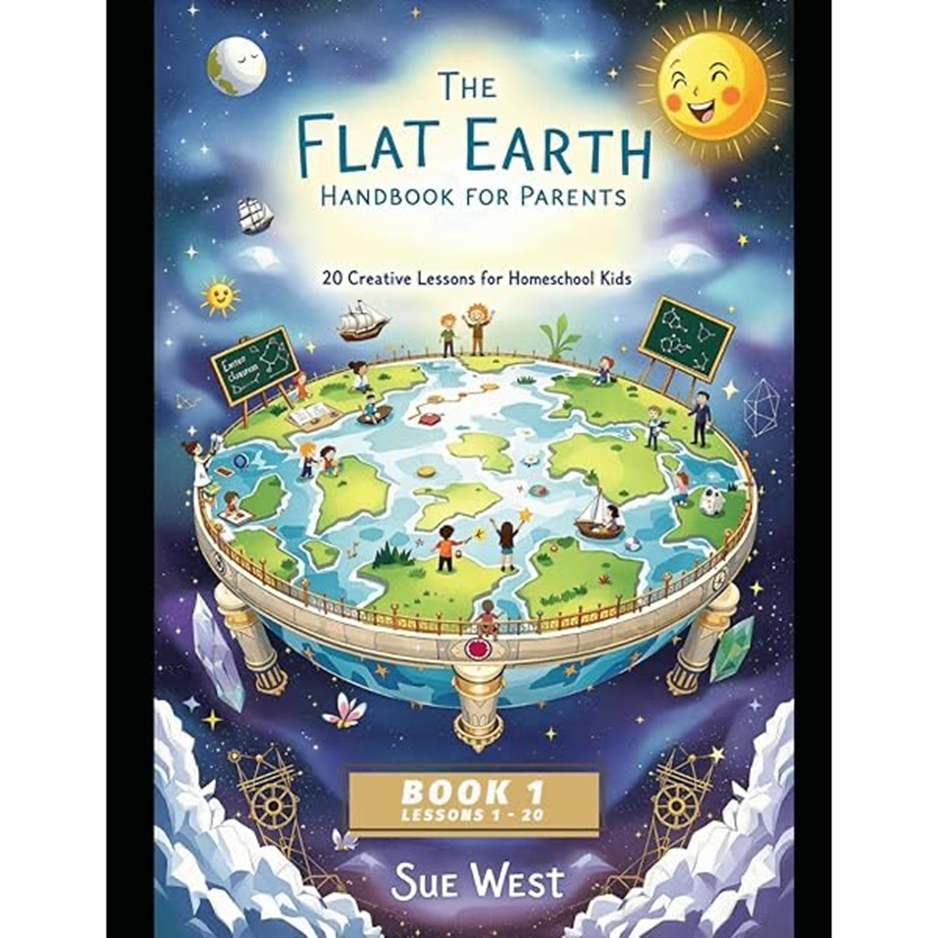
Flat Earth: Home Schooling

Did you know that some kids don’t go to school, but have their parents or guardians teach them at home? Look at the book cover below and try to think up reasons home schooling might be a good idea, or a bad idea:

New School Year Resolutions

The new school year is getting near. What are your new school year resolutions? Do you want to do better in a subject this year? Do you want to make a new close friend? Write down your top five goals for this year. What is the difference between a hope and a goal?

Where did Everything Come From?: A Short Philosophy Novel for Kids

Join young Billy and Beatrice, squabbling siblings, as they visit imaginary neighborhoods in different time periods, and even blast off into outer space! Engaging with oddball characters like Mr. Whom (a balloon), Mr. Sour Hour (a vulture) and Mr. Darwinkle (a bearded moose), they come to grips with Big Questions, like the nature of God, time, evolution, death, and the biggest question of all: where did everything come from?

Take A Screen Break

Did you know that some of the biggest problems eye doctors see in children is blurry vision and brightness of vision, which is directly relate to video screen use. Eyeglasses help when you are reading, and sunglasses are a must when going outside, especially in bright situations like the sun glaring of the snow. Give your eyes a rest and cut back on screen time!

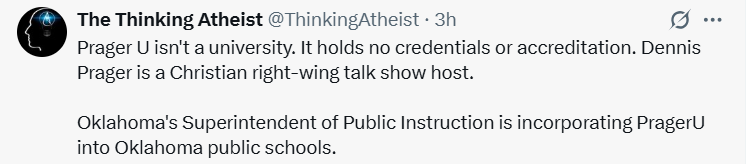
The Bible in Schools in Oklahoma

Oklahoma’s education leader Ryan Walters recently declared that every teacher had to use the Bible in class. The leader of one of the largest districts now says his staff won’t comply: “We are not going to require our teachers to teach from the Bible.”

Hemant Mehta notes with the new school year beginning in a few weeks, Nick Migliorino, superintendent of the Norman Public Schools, which serves over 15,000 students, said in an interview with the Norman Transcript that his district won’t be participating in this charade.

“I’m just going to cut to the chase on that. Norman Public Schools is not going to have Bibles in our classrooms, and we are not going to require our teachers to teach from the Bible,” Migliorino said. “The standards are clear and our curriculum is very clear. And we’re not going to deviate from that. I don’t know. I’m just going to be direct on that one.”

…“We’re gonna follow the law, we’re going to provide a great opportunity for our students, we’re going to do right by our students and right by our teachers, and we’re not going to have Bibles in our classrooms.”